
Back to Blogs
Industry
Cold Foil Printing for Product Labels: Process, Benefits and Applications
Ask a label converter what customers keep requesting on premium jobs and foil comes up fast. Gold on a tea label, silver on a skincare tube, a bit of shine on a wine neck sticker. Cold foil printing is how most converters say yes to those requests without buying dies or sending rolls to a second machine, and a hybrid press like the Jetrix-E can print and foil a label in one continuous pass.
Colorix
10 Oct 2026 · 5 min read
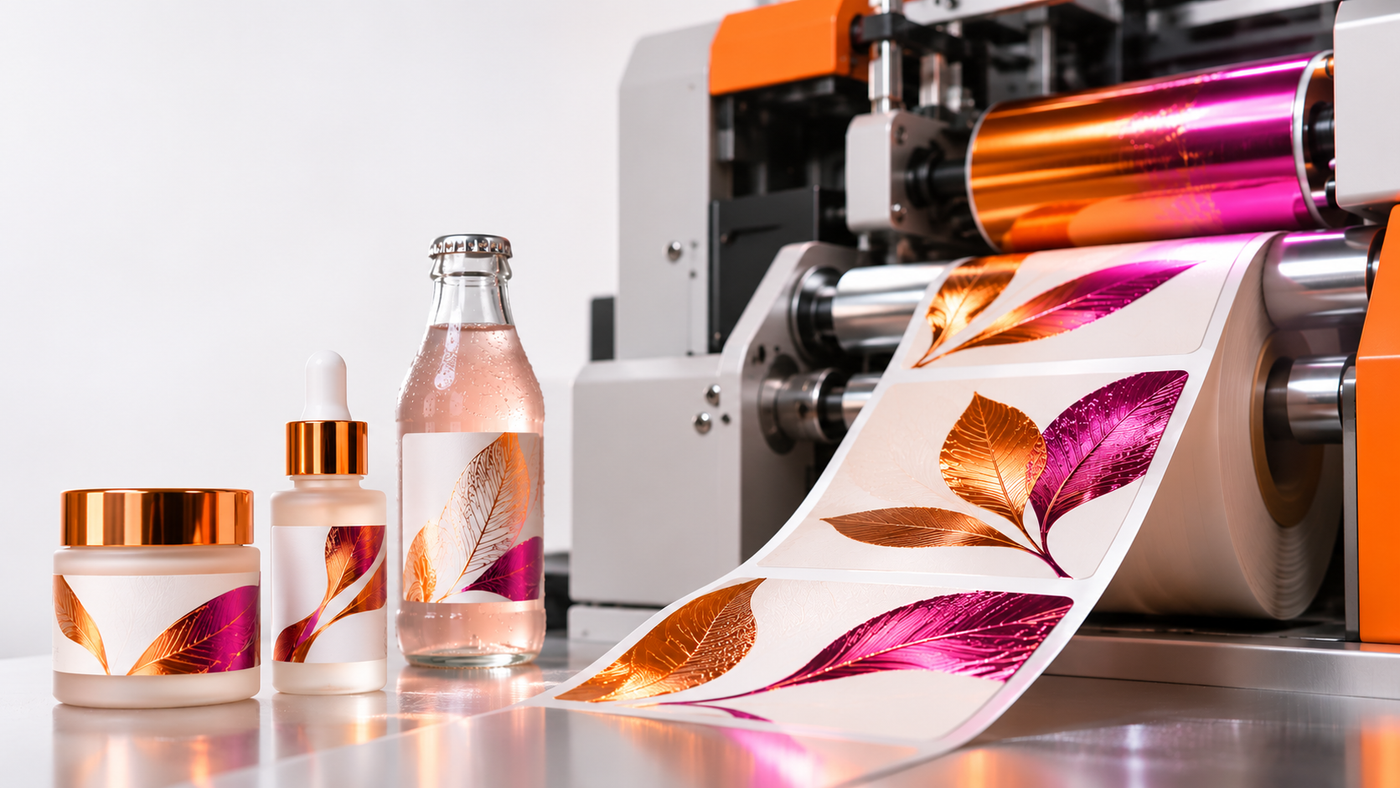
This guide covers how it works, where it beats hot foil and where it actually pays off. Short version: if you print labels and don’t offer foil, the better-paying jobs are going to someone else.
What Is Cold Foil Printing?
Heat isn’t part of it. That’s the whole idea. A UV-curable adhesive goes on the label only where you want metal, the foil sticks to that adhesive, and everything else stays untouched, so the shape of your artwork decides the shape of the shine.
You’ll also hear cold foil stamping, which is a slightly odd name because nothing gets stamped and there’s no heated die involved. Same result though, and buyers search both terms.
The Cold Foil Printing Process in 4 Steps
Four steps, one pass. Here’s the cold foil printing process in order.
Step 1: Adhesive goes down first. A flexo station prints UV-curable adhesive in the exact spots that need foil. A logo, a border, a thin line, whatever the design calls for.
Step 2: Foil meets adhesive. The foil roll presses against the label, grabs the adhesive and nothing else, and the leftover carrier peels away.
Step 3: UV cure. No cure, no foil. Curing is what locks it in so the metal survives handling and packing.
Step 4: Colour over the foil. Digital inks print on top in the same run, which means one silver foil can turn into gold, copper or metallic blue depending on what goes over it. Holographic foil works here too, for labels that need to catch an eye from across the shelf.
Why Converters Choose Cold Foil Labels
Hot foil isn’t bad. It’s just a poor match for how label jobs look now: short runs, frequent artwork changes, deadlines that were tight yesterday. Cold foil labels fit that reality far better, and we’d say so even if we weren’t selling a machine that does it.
- No die per design. Every new design on hot foil needs a new metal die, and somebody pays for that, usually you.
- Fine detail holds up. Thin lines and small patterns come out sharp. Very small serif text in foil is the first thing to fill in, so keep type bolder than you think you need to.
- No heat on the material. Thin films don’t warp or shrink, which matters most on lightweight PET and PP.
- One pass. Foil and colour go on together, so there’s less handling and the job moves faster.
- Foil only where it counts. Less foil used, lower cost per label, and customers still get the premium look.
Foil Sticker Printing: Small Format, Big Margin
Foil sticker printing is the easiest upsell in label work. Stickers are small, people handle them constantly and a little metal makes them noticeable instantly. Front labels on bottles, jars and tubes. Seal stickers on box closures. Brand logo stickers for gift packs. Launch and offer stickers that need to be seen before anything else on the pack.
Digital Foil Printing and Short Runs
Run lengths keep shrinking, that’s just the trend. Brands want five hundred labels now and a different design next month, and digital foil printing is getting attention because it makes foil effects realistic at those quantities. No plate cylinders, quick job changeovers, nothing to store.
A hybrid press carries the same logic over to cold foil. Test batches, seasonal versions and brand extensions stop being a tooling problem. Honestly, this is where converters win business from larger shops that can’t be bothered with small orders.
Cold Foil Printing on the Jetrix-E
The Jetrix-E puts digital inkjet, flexo and cold foil in one machine, so you’re not moving rolls between printing and finishing equipment.
- Inline cold foil unit. A pre-flexo station with cold foil adds metallic and holographic effects without stopping production.
- 4 to 7 colour printing. White, CMYK and up to two spot colours, for brand shades that need to match.
- Up to 50 m/min. Speed and resolution trade off against each other, so you pick what the job needs.
- Wide substrate range. PET, PVC, PP, PE, BOPP, synthetic paper, coated paper and aluminium foil.
- Camera inspection. Defects and colour drift get caught during the run, not after the roll is finished.
Where Cold Foil Printing Works Best
Wine, spirits and water labels are the obvious ones, since shelf presence is half the sale there. Food and beverage too: tea, coffee, chocolates, juices. Cosmetics and daily chemicals, where the label has to look as good as what’s inside the bottle. Shrink labels and laminated tubes, because film-based packaging takes foil well. And short-run, brand-extension work, which is probably the most overlooked of the lot.
Tips for Better Cold Foil Results
- Pick the substrate carefully. Smooth films and coated papers hold foil best, while rough uncoated stocks tend to give patchy coverage.
- Keep foil areas bold. Fine text loses its edge, so give artwork some breathing room.
- Design for contrast. Foil pops on dark, solid backgrounds like black, navy and deep green and gets lost on busy ones.
- Don’t foil everything. One strong metallic element on a calm layout beats full coverage every time.
- Print a sample first. Seeing the real finish costs far less than reprinting a roll.
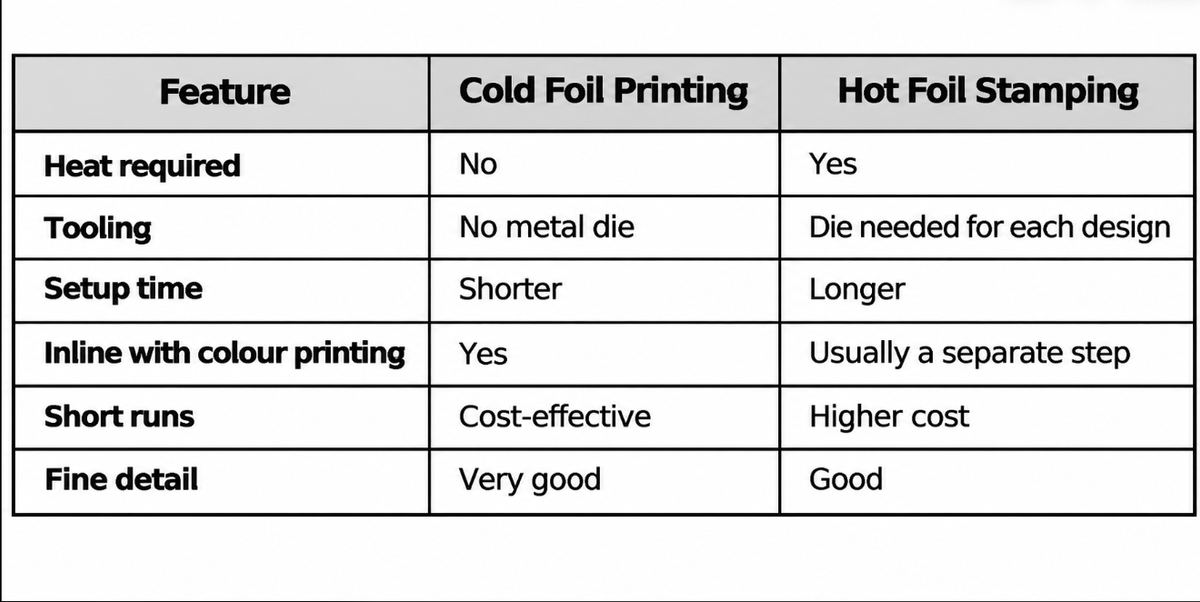
Cold Foil vs Hot Foil at a Glance
Final Thoughts
Foil used to mean extra machines, extra steps and extra cost. Now it can be one pass on one press.
If you’d like to see how the Jetrix-E hybrid digital label press fits your jobs, send us your requirements and we’ll help you pick the right setup.